
CT Scan
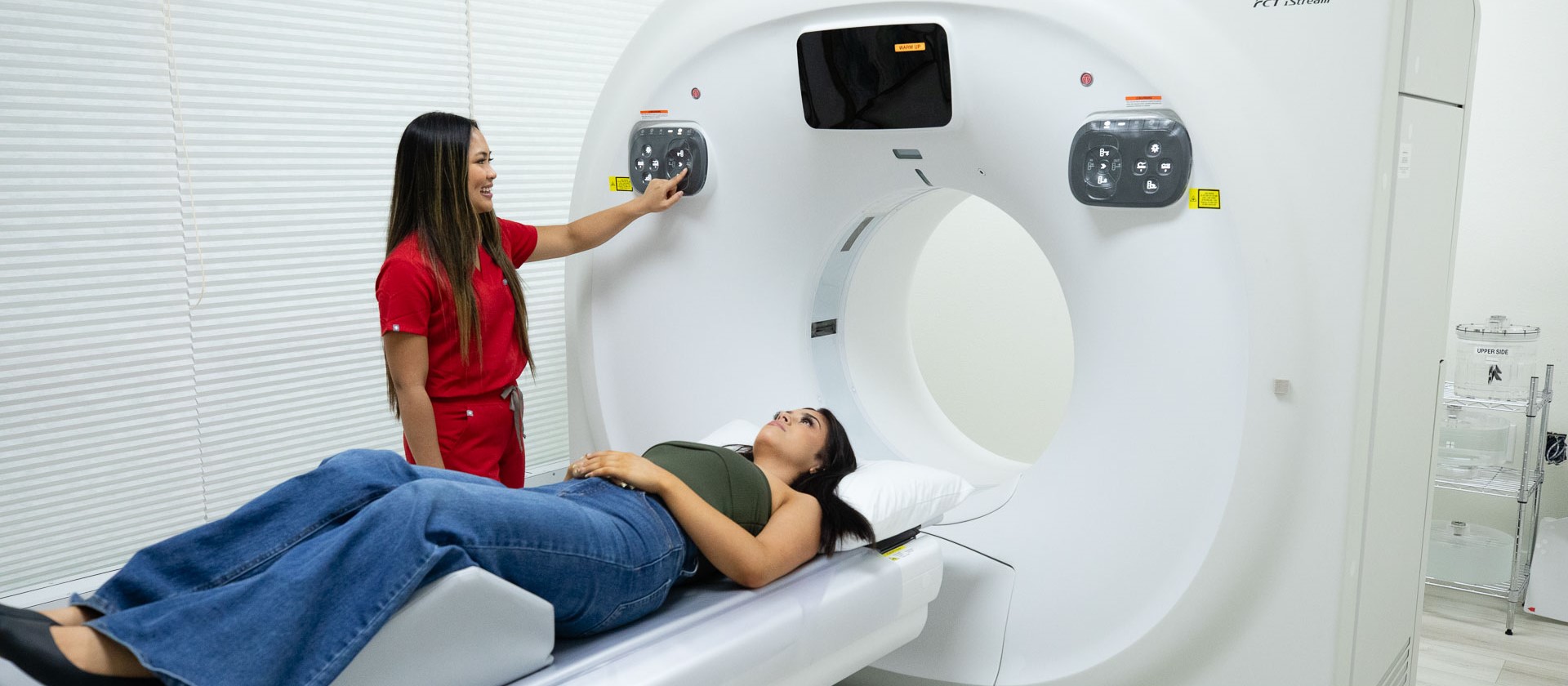
Fast, Detailed Cross-Sectional Imaging
A CT scan uses X-ray images captured from multiple angles to create detailed cross-sectional views of the body. These images help physicians evaluate bones, organs, blood vessels, and soft tissues with greater clarity than standard X-rays.
Key Features
- High-resolution cross-sectional imaging
- Rapid scan times for efficient exams
- Detailed visualization of bones, organs, and soft tissues
- Optional 3D image reconstruction
Commonly used to evaluate
- Traumatic injuries and fractures
- Internal organ abnormalities
- Tumor detection and evaluation
- Vascular conditions
- Abdominal and pelvic concerns
Contrast-Enhanced CT Imaging
Some CT exams require contrast material to improve visualization of specific structures such as blood vessels, organs, or the digestive system. Contrast material blocks X-rays and appears brighter on images, helping physicians distinguish between different types of tissue.
Contrast may be administered in different ways depending on the exam:
Oral Contrast
Swallowed as a liquid for digestive tract imaging.
Intravenous Contrast
Injected into a vein for enhanced imaging of blood vessels and organs.

What to Expect
Preparing for Your Exam
You may be asked to change into a gown and remove personal items such as jewelry, belts, or accessories containing metal. Preparation instructions vary depending on the area being scanned.
For some CT exams, particularly those involving contrast, you may be asked to fast for a period of time prior to your appointment. Any required fasting or special instructions will be communicated when your exam is scheduled.
During Your Exam
During the exam, you’ll lie comfortably on a table that moves through the CT scanner, which features a circular opening rather than a fully enclosed tunnel. The scanner rotates around the part of the body being examined while images are captured.
CT scans are typically completed within 10 to 30 minutes. A technologist is present at all times and can communicate with you through an intercom. You may be asked to breathe normally, hold your breath briefly, or follow simple breathing instructions during the scan. After the exam, most patients may resume normal activities immediately.
Schedule Your Imaging Appointment
Appointments are available for a range of imaging services. Contact the office to schedule your visit.
